






Author: Bianca Alves, PMP and Patryk Nosalik, PMP
A conversation with Grégoire Willommet before the PMI Switzerland event in Geneva, on a game-changing framework built to close the gap between project delivery and real adoption
Organisations are always introducing new tools, processes and ways of working. However, many change projects still face the same problem: the solution is delivered, but people do not fully adopt it in their daily work.
On 5 November 2026, PMI Switzerland will welcome Grégoire Willommet to Geneva for an event about this challenge.
Grégoire will present ACAEM, a change management framework that he created to help leaders and project teams plan, guide and measure change in a practical way.
This will mark the first time ACAEM has been presented at a PMI event anywhere in the world.
Before the event, we spoke with him about the framework, resistance to change, communication and the role of project managers.
A practical approach to change
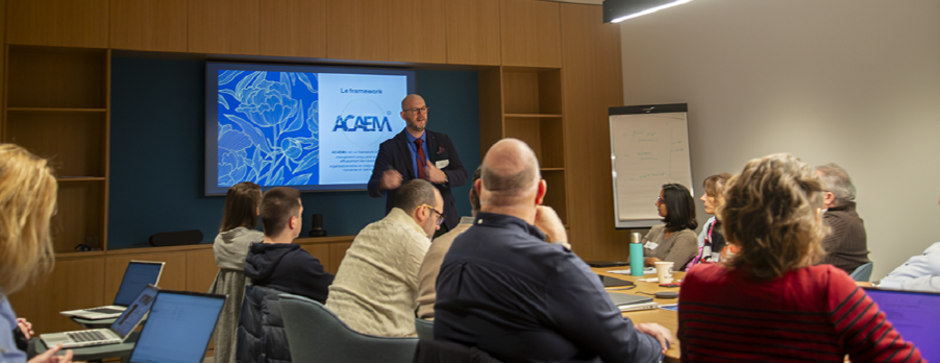
ACAEM stands for:
Analyse – Connect – Align – Engage – Measure
These five words describe the main actions of the framework. Rather than only explaining what successful change should look like, ACAEM focuses on what leaders and teams need to do in practice. The actions are not fixed steps, and teams may need to return to them several times during a project.
ACAEM was formalised in 2024, but it is not a 2024 idea: it is the structured synthesis of more than fifteen years of transformation work in the field. Grégoire does not present it as a replacement for the well-known methods that have existed for years. Its difference lies in its strong focus on practical work, delivery and measured adoption.
As he explained during our conversation, "Most frameworks tell you what good change looks like. ACAEM tells you what to do on Monday morning."
The framework is based on practical experience and includes tools that project teams and business leaders can use without extensive training.
For project managers, this is important. A project may deliver a new system or process on time and within budget, but this does not mean that people will use it successfully.
Change should not belong to only one team
In Grégoire’s view, change management should not be the responsibility of only one department.
Today, organisations face continuous and often conflicting changes. This has become the new normal. A central change management team cannot manage all of them.
Change specialists can support the business, provide advice and offer practical tools for adopting new processes, systems or structures.
Guiding people through change should be a responsibility shared by leaders, project managers and business teams, not just a specialist group. When this mindset becomes widespread, the organisation is genuinely transforming. This goes further: it means helping an organisation find its own way through change and become better prepared for what comes next.
Resistance can be useful
Resistance is often seen as a problem, but it can also provide useful information.
People may resist because they do not trust the change, do not understand the benefits or believe that important problems have not been considered.
During our interview, he shared an example from the introduction of a Project Management Office in a factory.
Some important stakeholders did not want their projects to be part of the new governance process. Instead of forcing them to join, the PMO started with the teams that were ready.
These projects received more visibility and better access to senior leaders. When the benefits became clear, some of the people who had resisted the PMO later wanted their projects to be included.
Their resistance was not simply negative behaviour. It showed concerns about trust, control and transparency.
Listening to these concerns can help the team understand what may be missing from the change plan. Trust grows when leaders are clear, reliable and do what they promise. In this case, the biggest resistors became the biggest proponents of the change.
Communication is not enough
Another common mistake is to think that change management is mainly about communication.
Communication is important, but emails, presentations and newsletters do not automatically lead to adoption. Communication without preparation can miss the purpose and context.
Before communicating, teams need to understand the situation, speak with the right people and make sure that leaders agree on the purpose and direction of the change.
Grégoire compared this work to preparing a meal in a kitchen. People may only see the final result, but a lot of work happens before it is ready. The same is true of ACAEM.
Without this preparation, communication may not answer the questions that people really have:
● Why are we making this change?
● What does it mean for my team?
● Are the leaders in agreement?
● How will we know whether the change is working?
Look for misalignment before resistance
When a change is moving forward on paper but not in reality, resistance may be the most visible problem.
But the first warning sign may appear earlier, when the project team and the sponsors are not fully aligned.
When the people leading the change do not share the same understanding, messages become unclear, decisions take longer and people start to lose confidence.
People may then start to resist because the change was not well planned or clearly explained.
Project managers should therefore measure more than time, cost and scope. They should also pay attention to sponsor alignment, stakeholder reactions and how well people are adapting to the new ways of working. To help teams reflect on these points, ACAEM offers a free online Success Score Card. The tool helps teams quickly identify where a transformation is at risk and where more attention is needed, before resistance becomes visible. The free online Success Score Card is available at www.acaem-change.com.
Meet the speaker
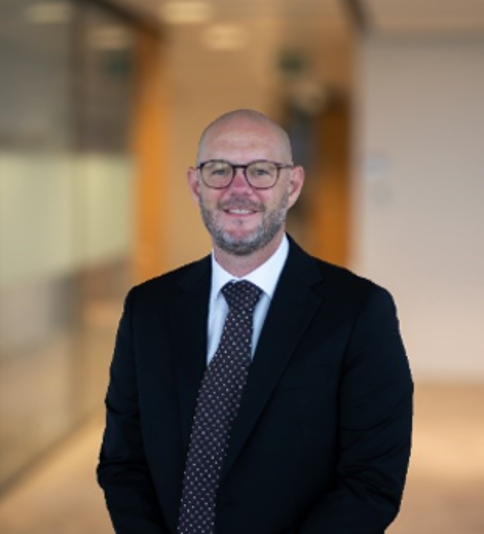
Grégoire Willommet is the founder of GWRC Advisory and the creator of ACAEM©. An Enterprise Transformation and Change Director with more than fifteen years of international experience in complex, regulated environments, he previously founded and led the Change Management & Transformation Office of an international Swiss-based company and holds a Prosci ADKAR Model Mastery certification.
He also teaches in Executive Education programmes at HEC Lausanne, where he contributes to courses on change management, leadership and transformation.
During the event, he will explain how ACAEM can help project professionals and leaders make change more practical, clear and measurable.
His main message is simple: change management should not only describe change. It should help people make it happen.
We look forward to exploring this practical approach to change management with the PMI Switzerland community in Geneva.
Event: Don’t Describe Change: Structure, Execute & Measure Transformation with ACAEM
Date: 5 November 2026
Location: Geneva
Speaker: Grégoire Willommet
Link to event: Don’t describe change: structure, execute & measure transformation with ACAEM