





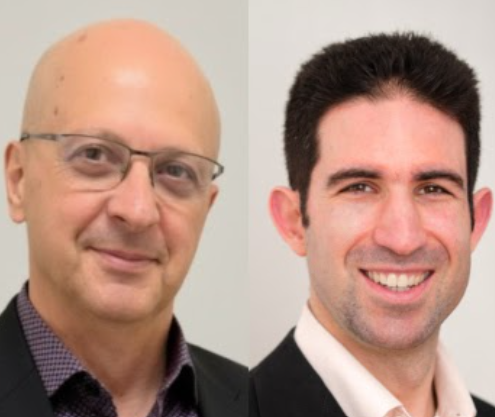
Authors: Adi Muslic, PMP and Joachim Dehais, PMP
PMI Global Summit Series (GSS) is the regional flagship gathering for project leaders, enterprise partners, chapters, and practitioners looking to share real-world perspectives on navigating change, shaping what’s next, and staying relevant as the pace accelerates.
The PMI Global Summit Series, held this year in Lisbon, Portugal, 29 and 30 April 2026, brought together project leaders from around the world under the theme “MORE, Together. When we share in our growth, we go beyond what is possible.” The message was clear: our profession is changing, shaped by the rapid rise of AI, new demands for faster governance and broader leadership in business transformation. For those of us working in Switzerland—where projects often sit at the intersection of strict regulation and high innovation—these signals are especially relevant.
Transformation and why it fails
A keynote on why transformation efforts fail and how change can become more durable was especially relevant in a time when organizations are under pressure to modernize quickly.
One of the most important takeaways is that AI is no longer a "future" trend; it is a present capability that we must integrate responsibly into our delivery environments.
However, AI is not a substitute for project leadership. Instead, the role of the Project Manager is evolving from simple task execution to orchestration and alignment across complex ecosystems. As we heard during the summit, the way we see ourselves is how others will see us; we must adopt a mindset that sees uncertainty as an opportunity.
AI in multicultural transformation
Our session struck at the heart of the matter, "Harnessing AI for Success in a Multicultural World."
During this presentation, we delivered elements of our special approach, along with audience-customised prompts to help project managers analyze themselves, their stakeholders, and their environments, all to shape a better future, faster.
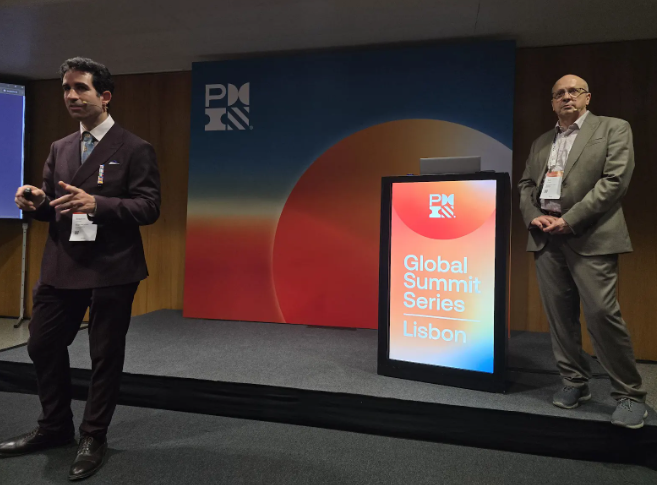
With this exclusive method merging personality, social, and cultural modeling—including frameworks like Hofstede’s famous Cultural Dimensions—we helped participants understand stakeholders at a very deep level with AI. When practicing AI to navigate cultural complexity and reduce conflict in political environments, participants could immediately notice and address blind spots, increasing stakeholder satisfaction even in the complex scenario they had to face.
By the end of the session, attendees had a new and practical approach to secure stakeholder engagement and project success in their own work environments.
Past technology into future humanity
Beyond AI, the summit highlighted that transformation is less about technology and more about decisions. A major blocker in many organizations is "decision latency"—the delay between needing a decision and actually making it. @Yolanda Cabrera
To combat this, we should aim for "one decision, one owner" and make ownership explicit rather than just sending "FYI" updates. Especially in "giga projects," the biggest risk is often not technical, but the political layer where priorities shift and governance changes. @Edoardo Favari
The changing role of PMOs
The summit also provided a fresh look at the evolving role of the PMO. As organizations adopt frameworks at scale, the PMO must become more than just a reporting hub: Future-ready PMOs should be adaptive, data and value-driven, and act as a coach to the rest of the organization. By propagating system thinking, the PMO can help bridge the gap between high-level strategy and daily execution. @Jens Korneck
Finally, the event reminded us that community matters more than ever. Professional resilience depends on our ability to share knowledge across sectors and borders.
Whether you are in pharma, finance, or technology, the goal remains the same: to act as a "translator" between technology and business priorities while staying focused on what truly matters—understanding people.
Let’s carry this energy back to our projects in Switzerland. The future belongs to those who can combine human judgment with AI-enabled delivery.
Joachim Dehais and Adi Muslic