






Author: Jia-Ying Guan, PMP
On 25 November 2025, the PMI Switzerland Chapter hosted an evening event in Lausanne to explore a vital project asset: Intellectual Property (IP). While often seen as a legal hurdle, the session framed IP as a strategic legal and economic tool that can determine a project's commercial success or failure.
Expert Insights
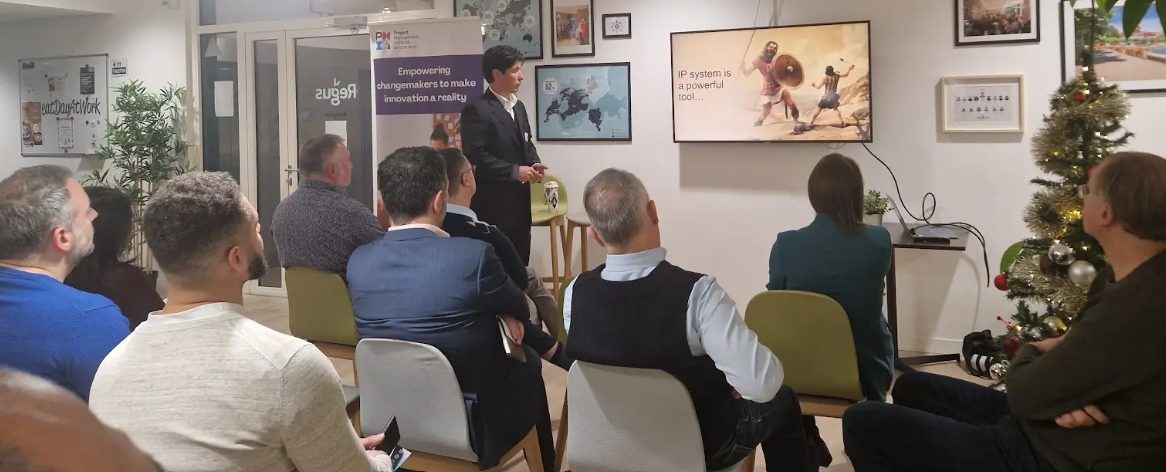
The keynote was delivered by Saidakhmad (Said) Azimov, Program Officer for the IP for Business Division at the World Intellectual Property Organization (WIPO). Drawing on an 18-year career, Mr. Azimov highlighted a staggering shift in the global economy: by 2020, intangible assets, such as IP, accounted for 90% of the S&P 500 market value.
Said Azimov’s Key Quote: “IP is a powerful tool for businesses. IP Rights give you control, deciding who can do what with your invention, creation, or brand.”
The 10-Step IP Lifecycle
For project managers, managing IP must go hand in hand with managing the project itself. Mr. Azimov introduced a comprehensive 10-step lifecycle as a circular process essential for long-term value:
- Identify your IP: Recognize existing or potential assets.
- Territoriality: Understand where to register and use your IP (protection is not automatic globally).
- Timing: Determine when to start the registration process to avoid missing priority dates.
- Task Assignment: Decide who will handle the IP tasks within the organization.
- Commercialization: Explore licensing options (exclusive or non-exclusive, cross-licensing, etc.) to generate revenue.
- Valuation: Use cost, market, or income methodologies to value IP assets.
- IP Audit: Regularly revise assets, as not all IP remains viable over time.
- Enforcement: Prepare for mediation, arbitration, or court action to protect rights.
- Legislation: Stay informed on national and international treaties.
- External Support: Utilize National IP Offices or WIPO self-learning tools.
A major takeaway for PMs was that IP is either Registrable (Patents, Trademarks) or Non-Registrable (Copyright, Trade Secrets), and both categories may significantly impact project success and business results.
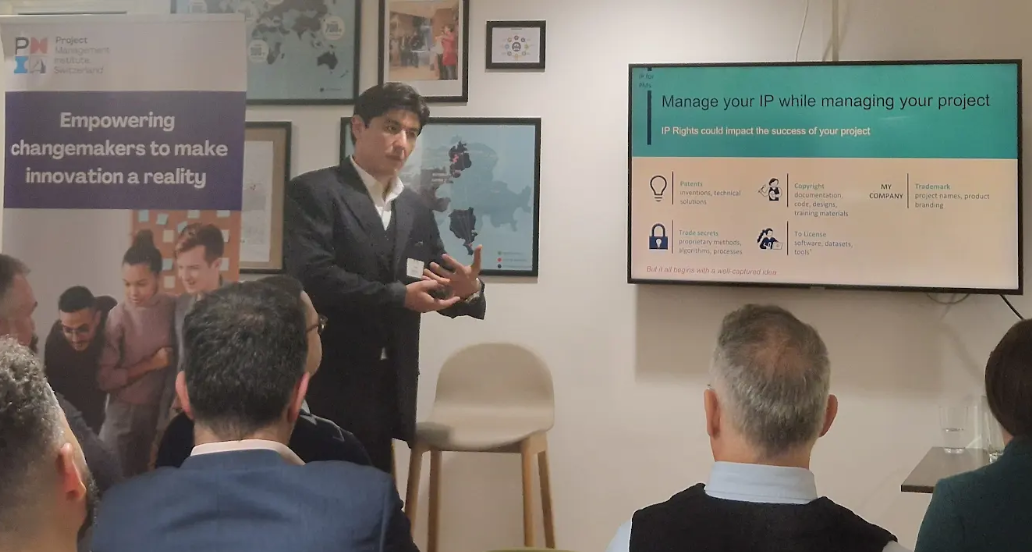
Risk Management: Lessons from the Field
The session used high-profile cases and a dedicated "Risk vs. Actions" framework to illustrate the stakes:
- Infringement Liability (The BlackBerry Case): Unauthorized use of someone else's IP can lead to massive settlements. Research In Motion (BlackBerry) ultimately paid $612 million in 2006 to settle a patent infringement suit with NTP.
- Strategic Licensing (The Fractus Case): Fractus adopted a sophisticated IP strategy early, pivoting to a model where 90% of its turnover comes from licensing its technology rather than physical product sales.
- Barriers to Launch: Missing IP rights can delay or even block the release of project deliverables.
Key Actions for Project Managers:
- IP-related Contracts: Include clauses to secure IP ownership (work-for-hire agreements, NDAs).
- Monitoring & Controlling: Ensure every change and version of project deliverables is documented.
- Legal Counseling: Seek expertise from patent attorneys or IP consultants early in the project.
- Team Training: Raise IP awareness within the team to coordinate management efforts effectively.

Deep Dive: The Q&A Session
The Q&A session reflected high interest in how traditional IP frameworks are adapting to modern technological shifts. Several key themes emerged from the audience’s questions:
The GPL and "Copyleft" Risk: A critical question was raised regarding the use of open-source components. Mr. Azimov warned about the "copyleft" nature of certain licenses, specifically the General Public License (GPL). He explained that copyleft is a play on the word "copyright". While copyright is often used to restrict use, copyleft uses the law to ensure a work remains open. If a project incorporates GPL-licensed code, the "reciprocity" rule may require the entire resulting software to be released under those same open terms, potentially forcing the disclosure of proprietary source code.
The Practicality of "Freedom to Operate" (FTO): Audience members asked how often an FTO check should be performed. Mr. Azimov suggested that project managers conduct "pulse checks" using tools such as WIPO PATENTSCOPE, Google Patents, or other relevant databases at the end of the planning phase. This ensures that the project’s direction doesn't infringe on existing patents before significant budget is spent on execution.
Distinguishing Copyright from Patents in Software: There was an important clarification on software protection. While the code itself is protected by Copyright (like a literary work), some jurisdictions, under certain conditions, allow patent protection to software-based inventions.

Extended Resources & Further Reading
To explore the tools and frameworks discussed during the event, we recommend the following official resources:
- WIPO IP for Business: A central hub for practical guides on patents, trademarks, and designs.
- WIPO IP Diagnostics Tool: A flagship self-assessment tool to help project managers identify IP assets and risks.
- WIPO Frontier Technologies (AI and IP): A dedicated portal for policy papers and observations on how AI is shaping the global IP landscape.
- Swiss Federal Institute of Intellectual Property (IPI): The primary resource for local Swiss IP regulations and trademark searches.
Networking and Thanks
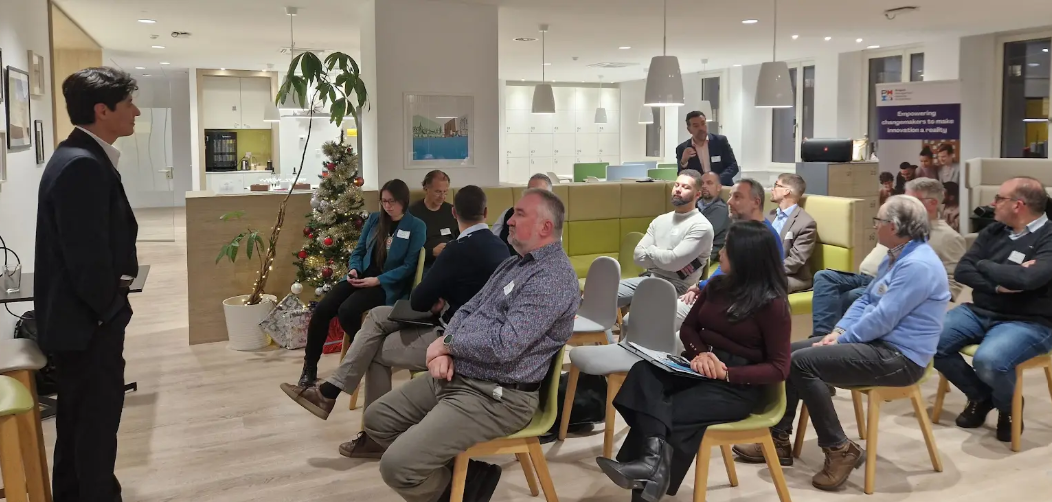
The evening concluded with a Networking Apéro, where attendees discussed how to apply these legal insights to their current projects.
A warm thank you to our organizers, Nikola Goran Čutura (VP Events), Anna Sinkevich, Armida Bayot, and Mai Nguyen (Events Team Romandie), for putting together the event, and to Saidakhmad Azimov for sharing his expertise.
We also extend our gratitude to Regus Lausanne for kindly providing the venue and supporting our community.
Exclusive Offer from Regus
Want to experience the professional environment at Regus? Visit this link to receive a free trial day worth CHF 72 at one of the IWG workspaces in Switzerland by subscribing to their contact list.
Jia-Ying Guan, PMP