





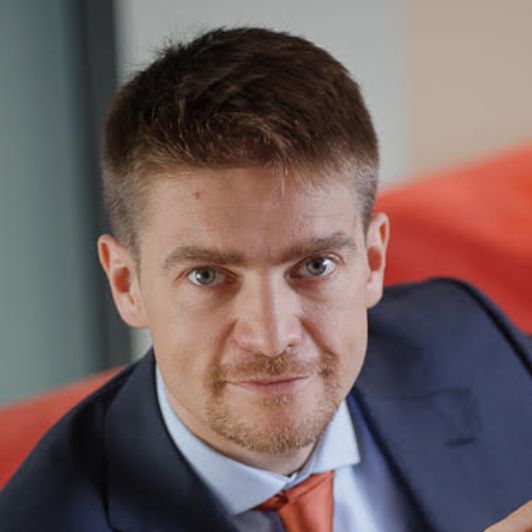
Author: Patryk NOSALIK, MBA, PMP
Operational Excellence Meets Project Excellence
What Every PMP and CAPM Holder Needs to Know About the World of Lean Six Sigma
Value of Lean thinking for project professionals
As project managers, we live with constraints: scope, time, cost, risk, and stakeholder expectations. Now you may have come across colleagues that do Lean &/ Six Sigma. So how does this fit into what we do? To bring us closer to the topic, you need to know that Lean & Six Sigma come from separate backgrounds but add complementary discipline that helps teams see work as a process, reduce waste, improve flow, and solve problems with data rather than intuition. So the value for PMI members is immediate: many project delays, quality issues, and handoff failures are not “project problems” in isolation, but process problems that repeat across projects and functions. We’ll find out more at an event we’re hosting with John Dennis, the Chairman of the International Lean Six Sigma Institute (ILSSI), the globally recognised certification body supporting Lean Six Sigma.
For a PMP, CAPM, or other PMI credential holder, this matters because project success increasingly depends on operational readiness after the project closes. A project can finish designing its main deliverable on time and still fail in perceived execution if the underlying processes of collaboration, handover, are inconsistent, slow, or poorly designed. Thus Lean Six Sigma gives teams a language for identifying those issues early, mapping where value is created, and correcting root causes before they become recurring delivery risks. That makes it especially relevant for transformation, service design, PMO improvement, and cross-functional change initiatives - the sort of things that can advance a project manager from early career to senior PM.
What Lean brings
At its simplest, Lean asks a powerful question: what in the system adds value, and what does not?
Toyota is one of the most famous examples of adapting Lean in practice, and ILSSI’s blog on Toyota's 4 Ps model — Philosophy, Process, People, and Problem Solving — provides the cultural philosophy that ILSSI emphasises alongside the technical toolkit. That is an important point for project leaders, because many project teams try to “improve” by adding controls, meetings, or approvals, when the real need is to simplify flow and align effort with outcomes.
Lean tools such as value stream mapping, 5S, kanban, and Just-In-Time are useful far beyond production lines. In project environments, they help reveal bottlenecks in intake, requirements management, approvals, change control, testing, release management, and customer onboarding.
For PMI professionals, the most practical takeaway is that Lean is not anti-governance. It is pro-purpose governance. Instead of asking whether every step is “controlled,” Lean asks whether each step is necessary, whether it helps the customer.
Six Sigma discipline
Where Lean focuses on flow and eliminating waste, Six Sigma adds rigor around variation, defects, and root cause analysis of these.
Together Lean + Six Sigma has a core framework DMAIC, which ILSSI describes as a structured problem-solving roadmap: Define, Measure, Analyze, Improve, and Control. This matters because project teams often jump to solutions too early, especially when deadlines are tight and stakeholder pressure is high. DMAIC slows the process down just enough to ensure the right problem is being solved, with evidence to support the chosen fix.
This structured approach is particularly useful in projects that involve service quality, handoff reliability, customer experience, and repeated operational failures. Rather than treating each issue as a one-off exception, Six Sigma helps teams identify patterns, quantify performance, and distinguish symptoms from causes. That creates a more durable form of improvement than “firefighting,” which is still common in many project-based organizations.
For PMI members, DMAIC can sit naturally alongside project lifecycles and governance frameworks. It does not replace project management; it strengthens it by improving how teams define problems, make decisions, and verify that changes actually work. In that sense, Lean Six Sigma becomes a delivery accelerator and a quality safeguard at the same time.
Is Lean Six Sigma know-how relevant for my industry…? Let’s take a look at some real world examples of application – warning this list is non exhaustive!
Healthcare: ILSSI's healthcare content covers lean hospital workflows, waste reduction in medical billing, and the application of Design Failure Mode and Effects Analysis (DFMEA) to medical device development. ILSSI notes that healthcare systems "are under immense pressure" and that lean methodologies — originally built for automotive production — have transferred with remarkable effectiveness to patient flow, diagnostic turnaround, and clinical administration. In the Swiss context, where healthcare project management is a major professional domain, this is immediately relevant.
Hybrid teams and knowledge work: ILSSI addresses the challenge of applying Lean Six Sigma in distributed and hybrid work environments directly. A case study from the ILSSI blog describes a global marketing team that used SIPOC diagrams to clarify roles, Kanban boards to visualise task flow, and structured retrospectives to create feedback loops — achieving a 20% reduction in campaign turnaround time. The connection to PMI's Agile and hybrid project delivery frameworks is direct and practical.
Supply chains: The most technically ambitious ILSSI content concerns autonomous supply chains, where agentic AI systems — large language models given tool-use capability — are beginning to manage replenishment decisions, flag anomalies, and rebalance inventory positions in real time. The research ILSSI has published in this space, drawing on work from V. Jannellia et al. from ETH Zurich, University of Cambridge ad the Alan Turing Institute, describes a future in which Lean principles are embedded in the decision-making logic of the supply chain itself, not just in the humans overseeing it.
Why we at PMI should care
PMI professionals are already trained to manage ambiguity, engage stakeholders, and deliver change. Lean Six Sigma adds a complementary toolkit for improving the systems that projects depend on and create. It helps project leaders move from “delivery of outputs” to “improvement of outcomes,” which is increasingly what executive sponsors expect.
It also creates stronger conversations with operations, quality, and continuous improvement functions. Instead of project managers being seen only as schedule custodians, they can become translators between strategy, process, and performance. That is a powerful career differentiator, especially in organizations where transformation is continuous rather than episodic.
Just as importantly, Lean Six Sigma encourages a culture of learning. Problems are not hidden, blamed, or normalized; they are measured, understood, and improved. For PMI members, that mindset can make the difference between managing a project and changing an organization.
What more? Event invitation!
The upcoming PMI Switzerland-hosted event with the ILSSI Chairman offers a chance to explore these ideas directly with John Dennis in person, with practical tool demonstrations of direct link to project management. Attendees can expect more than inspiration: the real value is in understanding frameworks, challenge areas, and use cases they can apply in their own organizations. Specifically, we’ll look at applications of Quality Circles, Kaizen continuous improvement, Standardised Work, Kano Analysis, Theory of Constraints, Value Stream Mapping, and Gemba Management.
If you work in project delivery, process improvement, or organizational change, this is a conversation worth joining. Lean Six Sigma is not a niche discipline for specialists alone; it is increasingly becoming a common language for building better systems, smarter decisions, and more resilient execution. ILSSI’s blog content shows that the field is evolving quickly, especially where AI and service-based improvement are concerned, and PMI members are well positioned to benefit from that evolution.
Come hear John Dennis on 30th June in Geneva. More details at Lean Six Sigma in Project Management: Beyond the Gantt Chart https://pmi-switzerland.ch/events/events-list/pmi-evening-event/2026-06-30-lean-six-sigma-pm-genf, see you there! Non-members very welcome too.
Authored by Patryk NOSALIK, MBA, PMP
Further reading:
PMI.org
ILSSI.org